The Indus Valley Civilization, also known as the Harappan Civilization, is one of the three early cradles of civilizations of the Old World, alongside Ancient Egypt and Mesopotamia.
Flourishing in the basins of the Indus River, it spanned across what is today mostly Pakistan and northwestern India. It was a Bronze Age civilization noted for its remarkable urban planning, baked brick houses, elaborate drainage systems, water supply systems, and clusters of large non-residential buildings.
At its peak, the civilization may have had a population of over five million. The inhabitants developed new techniques in handicraft and metallurgy, and engaged in extensive maritime trade.
The Indus Valley Civilization had standardized weights and measures accurate down to 0.25mm, and its urban drainage systems were more advanced than those in many European cities until the 18th century.
Source: Archaeological Survey of India / UNESCO World Heritage Records
Mehrgarh
Considered a precursor to the Indus Valley Civilization, Mehrgarh (located in Balochistan) is one of the earliest sites with evidence of farming and herding in South Asia, dating back to 7000 BCE.
Harappa & Mohenjo-daro
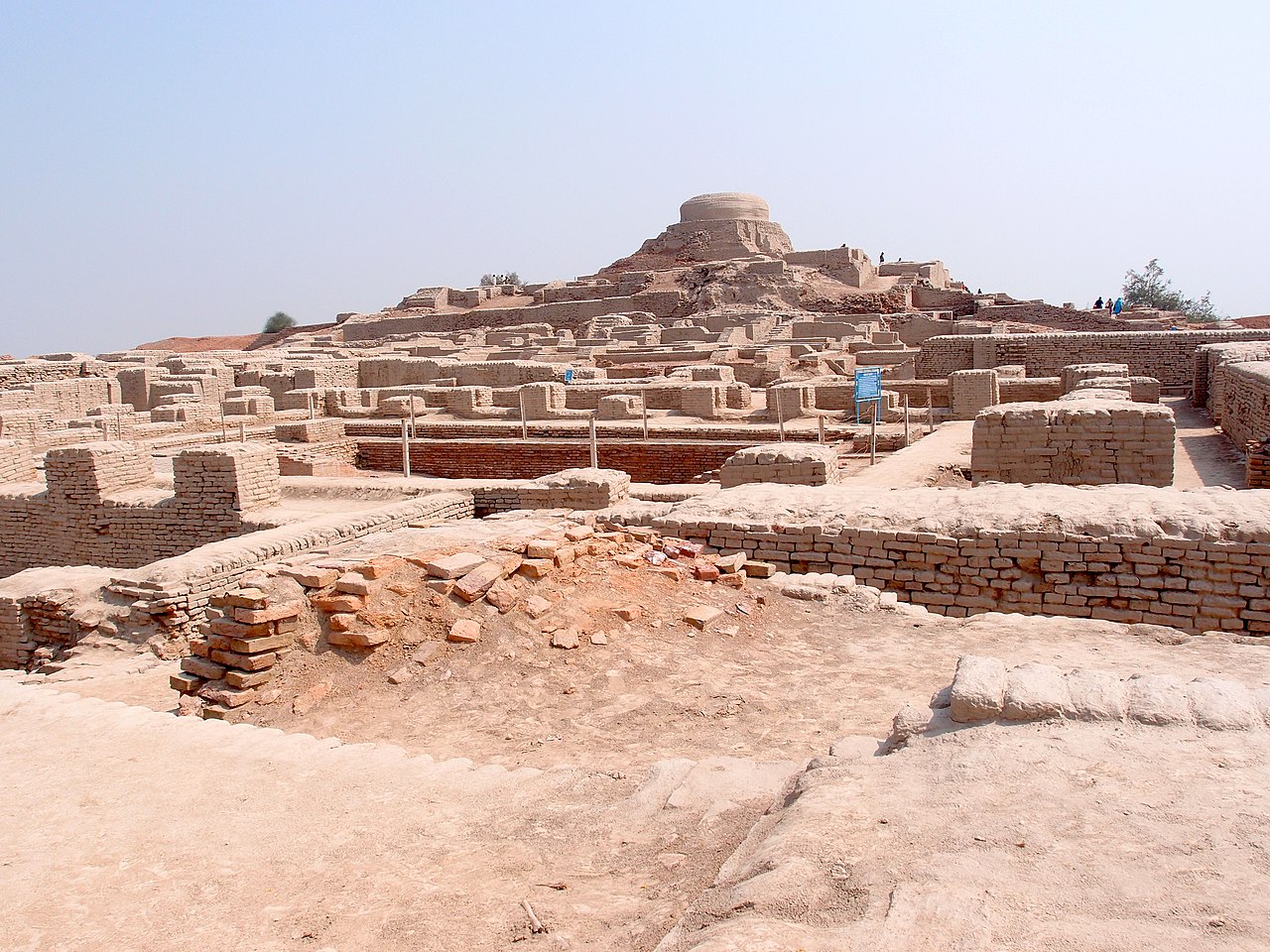
The two greatest cities of the civilization. Mohenjo-daro was one of the largest settlements of the ancient Indus Valley Civilization, and one of the world's earliest major cities, contemporaneous with the civilizations of ancient Egypt, Mesopotamia, Minoan Crete, and Norte Chico.
Urban Planning
The cities were built on a grid pattern with meticulously planned streets. They featured some of the world's first known urban sanitation systems, with individual homes drawing water from wells, and wastewater directed to covered drains on the main streets.
Agriculture & Trade
The economy relied heavily on trade, facilitated by major advances in transport technology. They cultivated wheat, barley, peas, lentils, linseed, and mustard. Cotton was also a key agricultural product.
Writing
The Indus script remains undeciphered. Thousands of steatite seals bearing these characters have been found, often depicting animals like unicorns, bulls, and elephants.
Architecture & Daily Life
Unlike contemporary civilizations, there were no monumental palaces or temples. Instead, the focus was on civic architecture like the Great Bath of Mohenjo-daro and large granaries. Daily life involved sophisticated crafts, pottery, and metallurgy.
Religion
While debated, some seals suggest worship of a mother goddess, a seated figure often compared to Shiva (Pashupati seal), and the reverence of certain animals and trees.
Decline
Around 1900 BCE, the civilization began to decline. The reasons are widely debated but likely include climate change, tectonic events affecting river courses (like the drying of the Sarasvati River), and a decline in trade with Mesopotamia.
Interactive Map
Major Events
- c. 3300 BCE: Early Harappan Phase begins
- c. 2600 BCE: Mature Harappan Phase, characterized by large urban centers
- c. 1900 BCE: Late Harappan Phase and the gradual decline of cities
- c. 1300 BCE: End of the Indus Valley Civilization
Key Places
Watch & Learn
Mohenjo-daro: The Lost City of the Indus
A documentary exploring the ancient city of Mohenjo-daro and the mysteries of the Indus Valley Civilization.
Harappa — The Forgotten City
Archaeological discoveries and the story of Harappa, the city that gave its name to the civilization.
Historical Media

Sources & References
UNESCO World Heritage Centre — Archaeological Ruins at Mohenjo-daro
Department of Archaeology and Museums, Government of Pakistan
Jonathan Mark Kenoyer, 'Ancient Cities of the Indus Valley Civilization' (Oxford University Press)
British Museum — Indus Valley Artifacts Collection